
Table of Contents
Level 2 EV Chargers in Hyderabad: Comprehensive 2026 Guide
Hyderabad has established itself as one of India’s leading centers for technology, pharmaceuticals, and green infrastructure. Supported by the Telangana State Electric Vehicle and Energy Storage Policy, the Hyderabad Metropolitan Development Authority (HMDA) region is undergoing rapid adoption of electric four-wheelers, two-wheelers, and commercial fleets. At the core of this transition across Cyberabad, HITEC City, Gachibowli, and the Financial District is the deployment of Level 2 EV chargers.
Unlike basic Level 1 charging (standard 15A 230V domestic sockets delivering 1.4 kW to 2.3 kW), a Level 2 EV charger operates on a dedicated 208V–240V single-phase or 415V three-phase AC connection. Delivering power outputs ranging from 7.4 kW to 22 kW, Level 2 Electric Vehicle Supply Equipment (EVSE) provides the ideal balance between capital expenditure, electrical grid demand, and charging speeds for residential gated communities, IT parks, shopping malls, and fleet depots across Hyderabad.
1. Technical Architecture & Electrical Topologies for Hyderabad’s Grid
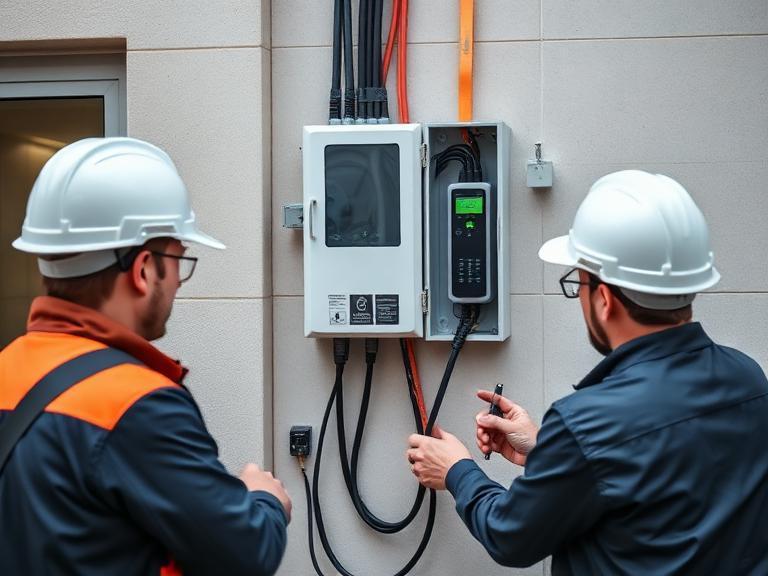
Deploying Level 2 AC chargers in Hyderabad requires adjusting electrical designs to match local low-voltage (LV) grid characteristics managed by the Telangana Southern Power Distribution Company Limited (TSSPDCL).
+---------------------------------------------------------------------------------------+
|                    LEVEL 2 AC EV CHARGER ELECTRICAL ARCHITECTURE                      |
|                                                                                       |
|   [TSSPDCL Grid Supply]                                                               |
|   415V 3-Phase / 240V 1-Phase 50Hz                                                    |
|            |                                                                          |
|            v                                                                          |
|   +-------------------------------------------------------+                           |
|   | Main Distribution Board & Energy Meter (LT-IX EV)     |                           |
|   +---------------------------+---------------------------+                           |
|                               |                                                       |
|                               v                                                       |
|   +-------------------------------------------------------+                           |
|   | Mandatory Protection: MCB + RCCB (Type A/B 6mA DC) + SPD|                         |
|   +---------------------------+---------------------------+                           |
|                               |                                                       |
|                               v                                                       |
|   +-------------------------------------------------------+                           |
|   | Level 2 Smart EVSE Controller (SECC Engine)          |                           |
|   | - 1 kHz PWM Control Pilot (IEC 61851-1)               |                           |
|   | - Cellular/Wi-Fi Telemetry (OCPP 1.6J / 2.0.1)        |                           |
|   +---------------------------+---------------------------+                           |
|                               |                                                       |
|                               v (AC Power via Type 2 Cable)                           |
|   +-------------------------------------------------------+                           |
|   | Vehicle Onboard Charger (OBC: 3.3kW / 7.2kW / 11kW)   |                           |
|   +---------------------------+---------------------------+                           |
|                               |                                                       |
|                               v (Direct Current Conversion)                           |
|   +-------------------------------------------------------+                           |
|   | Traction Battery Pack (Nexon EV, MG ZS, BYD Atto 3)   |                           |
|   +-------------------------------------------------------+                           |
+---------------------------------------------------------------------------------------+
1.1 Single-Phase vs. Three-Phase Deployments
In the context of Indian urban electrical infrastructure:
- 7.4 kW Single-Phase Configuration (240V AC, 32A continuous load):
- Primary Use Case: Individual villas, residential gated apartments (My Home, Aparna, Jayabheri communities), and small office parking.
- Grid Requirement: Requires a dedicated 40A single-phase breaker on a 240V supply. Drawn continuous load is 32A, adhering to the National Electrical Code standard of 125% overcurrent margin ($32\text{A} \times 1.25 = 40\text{A}$).
- 11 kW to 22 kW Three-Phase Configuration (415V AC, 16A to 32A continuous load):
- Primary Use Case: Commercial IT Parks (Mindspace, Knowledge City), retail hubs (Inorbit, Sarath City Capital Mall), and hotel valet parking.
- Grid Requirement: Requires a 415V 3-phase + Neutral supply. An 11 kW output draws 16A per phase, while a 22 kW output draws 32A per phase.
1.2 The Vehicle Onboard Charger Bottleneck
A Level 2 charger supplies raw AC power; the vehicle’s Onboard Charger (OBC) manages the conversion to high-voltage DC for the battery:
| Vehicle Model in Hyderabad | Battery Capacity | Max Supported AC Input | 7.4 kW Level 2 Charge Time | 22 kW 3-Phase Level 2 Charge Time |
| Tata Nexon EV Long Range | 40.5 kWh | 7.2 kW (1-Phase) | ~5.8 Hours | ~5.8 Hours (Limited by OBC) |
| MG ZS EV | 50.3 kWh | 7.4 kW (1-Phase) | ~6.8 Hours | ~6.8 Hours (Limited by OBC) |
| BYD Atto 3 / Seal | 60.4 / 82.5 kWh | 7.0 kW / 11 kW | ~8.5 / 11.8 Hours | ~5.5 / 7.5 Hours |
| Hyundai IONIQ 5 | 72.6 kWh | 11.0 kW (3-Phase) | ~10.0 Hours | ~6.6 Hours |
| BMW i4 / Mercedes EQE | 83.9 / 90.6 kWh | 11.0 kW (3-Phase) | ~11.5 Hours | ~7.8 Hours |
2. Regulatory Framework, TGREDCO Policy, and DISCOM Approvals
Deploying Level 2 EV chargers in Hyderabad requires compliance with state guidelines and electrical safety codes.
+---------------------------------------------------------------------------------------+
|                    HYDERABAD DISCOM (TSSPDCL) APPROVAL PIPELINE                       |
|                                                                                       |
|   1. Site Electrical Audit & Connected Load Verification                              |
|      (Evaluate existing transformer spare capacity at site)                            |
|                                                                                       |
|   2. Application Filing via TSSPDCL Online EV Portal                                  |
|      (Select Tariff Category: LT-IX / HT-EV Category)                                 |
|                                                                                       |
|   3. CEA Compliance & Earthing Audit Inspection                                       |
|      (Dual earthing verification, RCCB 6mA DC trip validation)                        |
|                                                                                       |
|   4. Dedicated Smart Meter Installation & Connection Energization                     |
+---------------------------------------------------------------------------------------+
2.1 The Nodal Role of TGREDCO
The Telangana State Renewable Energy Development Corporation (TGREDCO) coordinates public and private charging deployments across Telangana. Key policies for Level 2 charging in Hyderabad include:
- Mandatory Inclusion in Building Bye-Laws: New commercial buildings, malls, and residential complexes governed by HMDA must reserve a minimum of 20% of parking capacity equipped with EV charging conduits and distribution boards.
- Capital Subsidies and Incentives: Periodic state incentives support public Level 2 deployments in government parking zones, TSRTC bus depots, and MMTS metro stations.
2.2 TSSPDCL Tariff Structure (LT-IX EV Category)
TSSPDCL maintains a dedicated low-tension tariff category—LT-IX (EV Charging Stations)—designed for public and commercial EV chargers in Hyderabad:
- Energy Charges: Fixed base rate (typically around ₹6.00 to ₹7.00 per kWh) plus applicable fuel cost adjustments (FCA) and electricity duty.
- Demand Charges: Reduced fixed demand charges compared to standard commercial LT-II categories, lowering the operating cost of multi-charger Level 2 installations.
- Time-of-Day (ToD) Tariff Shifting: Encourages night charging (10:00 PM to 6:00 AM) by offering off-peak energy discounts, aligning with residential overnight charging habits.
3. Site Engineering, Earthing, and CEA Safety Standards
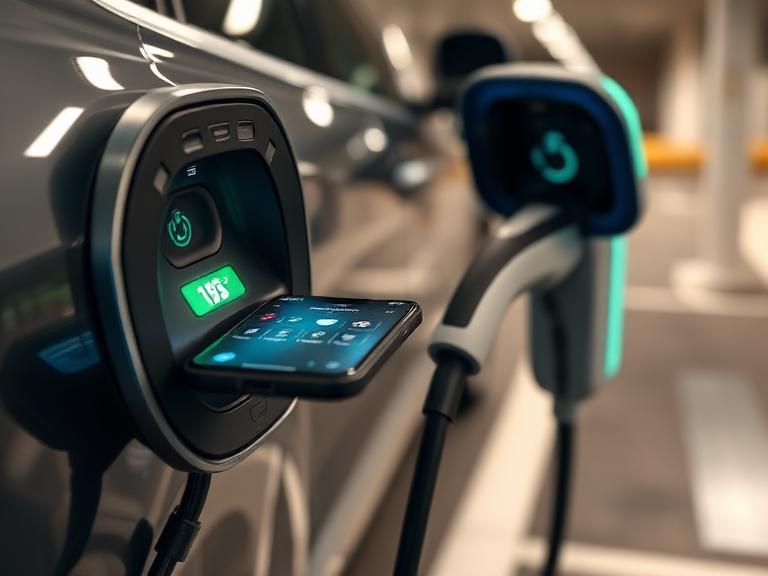
The tropical summer environment in Hyderabad—where ambient temperatures regularly exceed 40°C—demands strict safety and environmental standards for Level 2 EVSE deployments.
+---------------------------------------------------------------------------------------+
|                       LEVEL 2 MANDATORY ELECTRICAL SAFETY SYSTEM                      |
|                                                                                       |
|  +---------------------------------------------------------------------------------+  |
|  | Main Breaker: 40A / 63A MCB (Curve C or D)                                      |  |
|  +-------------------------------------+-------------------------------------------+  |
|                                        |                                              |
|                                        v                                              |
|  +---------------------------------------------------------------------------------+  |
|  | Residual Current Protection: Type A RCCB + Integrated 6mA DC Fault Detection    |  |
|  +-------------------------------------+-------------------------------------------+  |
|                                        |                                              |
|                                        v                                              |
|  +---------------------------------------------------------------------------------+  |
|  | Surge Protection Device (SPD): Type 2 SPD against Lightning/Grid Voltage Spikes |  |
|  +-------------------------------------+-------------------------------------------+  |
|                                        |                                              |
|                                        v                                              |
|  +---------------------------------------------------------------------------------+  |
|  | DUAL COPPER PIPE/CHEMICAL EARTHING SYSTEM                                       |  |
|  | Pit 1: Protective Earth (PE)  <-- Resistance < 5 Ohms --> Pit 2: Neutral Ground   |  |
|  +---------------------------------------------------------------------------------+  |
+---------------------------------------------------------------------------------------+
3.1 Central Electricity Authority (CEA) Compliance
Level 2 installations in Hyderabad must comply with the CEA (Measures relating to Safety and Electric Supply) Regulations:
- Mandatory 6mA DC Leakage Sensing: AC charging can introduce smooth DC fault currents that blind standard Type A RCCBs. Level 2 EVSEs must include Type B RCCBs or integrated 6mA DC Residual Direct Current Detecting Devices (RDC-DD) compliant with IEC 62955.
- Dual Earthing System: Commercial installations require separate chemical/copper plate earthing pits for system neutral and equipment protective earth (PE), ensuring earthing pit resistance remains below 5 Ohms.
- Ingress Protection (IP Rating): Outdoor chargers across Hyderabad must feature at least IP65 ingress protection against monsoon rains and IK10 impact resistance in public commercial parking areas.
4. Software Management Protocols: OCPP, Payments, & Smart Load Balancing
Commercial Level 2 charging networks across Cyberabad rely on open communications standards to manage access, collect payments, and protect local transformers.
  +------------------+          IEC 61851-1 PWM          +------------------+
  | Electric Vehicle |<=================================>| Level 2 Charger  |
  |  (Nexon EV, MG)  |   (Control Pilot State Handshake) |  (7.4kW - 22kW)  |
  +------------------+                                   +--------+---------+
                                                                  |
                                                                  | OCPP 1.6J / 2.0.1
                                                                  | (Cellular / Wi-Fi)
                                                                  v
                                                         +------------------+
                                                         | Cloud Management |
                                                         | Platform (CSMS)  |
                                                         +--------+---------+
                                                                  |
                                                                  | UPI / BharatPE
                                                                  v
                                                         +------------------+
                                                         | User Mobile App  |
                                                         | (Start/Pay/Track)|
                                                         +------------------+
4.1 OCPP (Open Charge Point Protocol) Implementation
- OCPP 1.6J: The baseline protocol used by commercial charging networks operating in Hyderabad (e.g., Tata Power EZ Charge, Kazam, Bolt.earth, ChargeZone). It enables real-time status updates, remote start/stop operations, billing calculations, and dynamic power management.
- OCPP 2.0.1 / 2.1: Modern software platforms are adopting OCPP 2.0.1 for enhanced security (TLS encryption), improved error diagnostics, and native ISO 15118 Plug & Charge support.
4.2 Dynamic Load Management (DLM) in IT Parks
In high-density business districts like HITEC City and the Financial District, connecting dozens of 7.4 kW or 22 kW Level 2 chargers simultaneously can overload commercial building transformers:
+----------------------------------------------------------------------------------------+
|                     DYNAMIC LOAD MANAGEMENT IN COMMERCIAL BUILDINGS                    |
|                                                                                        |
|  [Commercial Building Main Distribution Panel: Sanctioned Capacity Cap = 100 Amps]      |
|                        |                                                               |
|                        v                                                               |
|             +---------------------+                                                    |
|             | Real-Time CT Sensor | (Monitors base building AC/Lighting load)         |
|             +----------+----------+                                                    |
|                        |                                                               |
|                        v                                                               |
|             +---------------------+                                                    |
|             | Local DLM Controller|                                                    |
|             +---+-----+-----+-----+                                                    |
|                 |     |     |                                                          |
|      +----------+     |     +----------+                                               |
|      |                |                |                                               |
|      v                v                v                                               |
|  [Charger 1]     [Charger 2]      [Charger 3]                                          |
|  (Throttled: 16A)(Throttled: 16A) (Throttled: 16A) --> Combined Draw = 48A (Safe Zone)  |
+----------------------------------------------------------------------------------------+
- Active Transformer Monitoring: Current Transformers (CTs) measure building power draw continuously.
- Dynamic Power Throttling: As office air conditioning loads rise during hot afternoon hours, the DLM controller lowers the PWM duty cycle on connected chargers, reducing current draw (e.g., from 32A down to 16A).
- Load Shifting: As building base load drops in the evening, charging power scales back up to 32A automatically.
5. Commercial Cost Analysis: CapEx, OpEx, & ROI for Hyderabad Property Owners
Installing Level 2 chargers offers real estate developers, IT park operators, and gated communities in Hyderabad an opportunity to monetize parking spaces while attracting high-value tenants.
5.1 Capital Expenditures (CapEx)
| Component | Residential 7.4 kW Charger | Commercial Dual-Gun 22 kW AC Charger |
| EVSE Hardware Cost | ₹35,000 – ₹60,000 | ₹1,20,000 – ₹2,20,000 |
| Cabling (Armored Copper/AL) | ₹5,000 – ₹15,000 (Short Run) | ₹25,000 – ₹80,000 (Long Run) |
| Switchgear (MCB, RCCB, SPD) | ₹6,000 – ₹12,000 | ₹18,000 – ₹35,000 |
| Earthing & Civil Pad | ₹8,000 – ₹15,000 | ₹15,000 – ₹30,000 |
| DISCOM Approval & Metering | ₹5,000 – ₹12,000 | ₹15,000 – ₹40,000 |
| Total Estimated CapEx | ₹59,000 – ₹1,14,000 | ₹1,93,000 – ₹4,05,000 |
5.2 Operational Expenditures (OpEx) & Revenue Models
- Power Costs: Billed under the TSSPDCL LT-IX EV rate (~₹6.50/kWh).
- Software License & CMS Fees: Cloud platform software fees range from ₹250 to ₹600 per charger per month.
- Maintenance & Servicing: Periodic connection checks, earthing pit testing, and cable maintenance (~₹3,000 to ₹8,000 per year).
Revenue Generation Model (Commercial Mall or IT Park):
- Electricity Cost: ₹6.50 per kWh.
- Target Billing Rate to Driver: ₹14.00 per kWh.
- Gross Margin: ₹7.50 per kWh.
- Daily Throughput (Two 22kW Guns @ 6 Hours Use): ~130 kWh delivered daily.
- Monthly Gross Profit: $130 \times \text{₹}7.50 \times 30 \text{ days} = \text{₹}29,250$.
- Estimated Payback Period: Approximately 12 to 18 months.
6. Preventive Maintenance & Maintenance Workflows
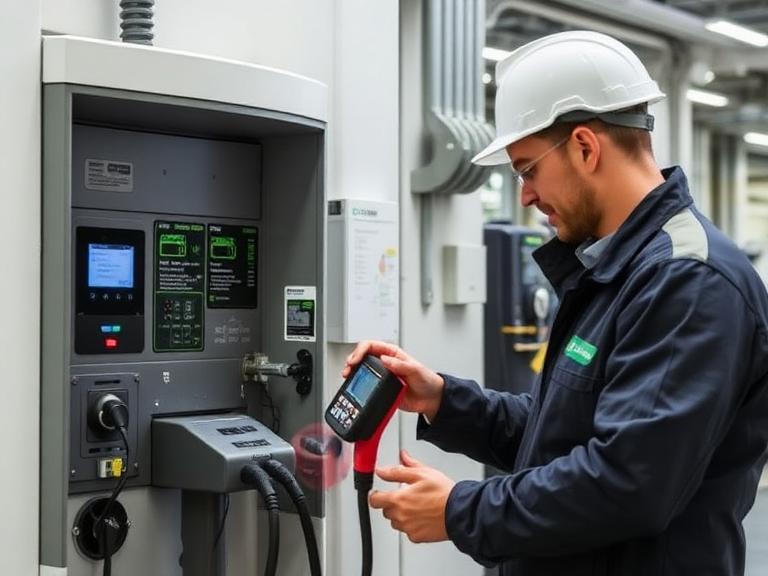
Because Level 2 AC chargers do not require high-power liquid cooling systems, they are generally reliable. However, Hyderabad’s dust, monsoon rains, and hot weather make structured maintenance essential.
+------------------------------------------------------------------------------------+
|                   LEVEL 2 EVSE PREVENTIVE MAINTENANCE CHECKLIST                    |
|                                                                                    |
|  [Monthly]     - Inspect physical cable and Type 2 connector head for damage/wear. |
|                - Wipe down enclosure exterior and clean dust build-up.             |
|                - Test mechanical cable retractor/holster lock mechanism.           |
|                                                                                    |
|  [Quarterly]   - Press test button on RCCB/RCD breaker to confirm trip response.   |
|                - Measure earthing pit resistance (confirm reading stays < 5 Ohms). |
|                - Inspect internal terminal connections for thermal discoloration. |
|                                                                                    |
|  [Annual]      - Perform insulation resistance testing (Megger test).              |
|                - Recalibrate energy meter against standard testing instruments.    |
|                - Apply firmware updates via OCPP cloud software platform.          |
+------------------------------------------------------------------------------------+
Frequently Asked Questions (FAQs)
FAQ 1: What is a Level 2 EV charger, and how does it work in Hyderabad?
A Level 2 EV charger in Hyderabad operates on 208V–240V single-phase or 415V three-phase AC electricity, delivering power outputs between 3.3 kW and 22 kW. It acts as an intelligent EVSE control unit, delivering AC power to the vehicle’s onboard charger, which converts it to DC to charge the battery.
FAQ 2: What are the standard power ratings for Level 2 EV chargers in Hyderabad?
The most common ratings are 7.4 kW (single-phase, 32A) for homes, apartments, and private parking, and 11 kW to 22 kW (three-phase, 16A–32A) for commercial office spaces, malls, and fleet hubs.
FAQ 3: Which nodal agency regulates EV charging infrastructure in Telangana?
The Telangana State Renewable Energy Development Corporation (TGREDCO) is the designated state nodal agency responsible for coordinating and implementing EV charging policies across Hyderabad and Telangana.
FAQ 4: Which DISCOM handles EV charging electrical approvals in Hyderabad?
The Telangana Southern Power Distribution Company Limited (TSSPDCL) manages power approvals, dedicated LT-IX EV tariffs, and meter allocations across the Hyderabad Metropolitan Development Authority (HMDA) jurisdiction.
FAQ 5: What is the dedicated TSSPDCL tariff rate for EV charging in Hyderabad?
TSSPDCL provides a dedicated LT-IX EV tariff category for commercial EV charging. Energy charges are structured at a fixed base rate (typically ₹6.00 to ₹7.00 per kWh plus applicable fuel surcharges and taxes), lower than standard LT-II commercial rates.
FAQ 6: How long does a 7.4 kW Level 2 EV charger take to charge a car in Hyderabad?
A 7.4 kW Level 2 charger takes approximately 5 to 8 hours to fully charge a typical 40 kWh to 60 kWh battery (e.g., Tata Nexon EV, MG ZS EV), making it ideal for overnight residential charging or full-workday office charging.
FAQ 7: What connector plug type is used on Level 2 AC chargers in Hyderabad?
The standard connector for electric cars in Hyderabad is the IEC 62196 Type 2 plug. Light electric vehicles (two-wheelers and three-wheelers) may use IS-17017 / IEC 60309 industrial sockets or Bharat AC-001 configurations.
FAQ 8: Can I install a Level 2 EV charger in my apartment building in Hyderabad?
Yes. Under Telangana’s EV policy, Gated Communities and Apartment Resident Welfare Associations (RWAs) are encouraged to support EVSE installations. Residents can connect the charger to their dedicated TSSPDCL apartment meter or install a separate EV sub-meter.
FAQ 9: What electrical protections are required for Level 2 charger installations in Hyderabad?
Installations must feature dedicated MCBs, RCCBs with Type A or Type B protection (including 6mA DC leakage detection), dual chemical/copper earthing (<5 Ohms resistance), and Surge Protection Devices (SPDs) compliant with CEA safety guidelines.
FAQ 10: How much does it cost to purchase and install a Level 2 EV charger in Hyderabad?
A residential 7.4 kW Level 2 charger costs between ₹35,000 and ₹65,000 for hardware, while commercial dual-gun 22 kW units cost ₹1,20,000 to ₹2,20,000. Installation, cabling, earthing, and DISCOM permissions add ₹15,000 to ₹50,000+ depending on site complexity.
FAQ 11: Why is Dynamic Load Management (DLM) essential for commercial Level 2 charging hubs in HITEC City?
DLM automatically monitors a commercial building’s total real-time electrical demand and adjusts the current sent to connected Level 2 chargers. This prevents panel overloads during peak working hours, helping site owners avoid demand charges from TSSPDCL.
FAQ 12: How do public Level 2 chargers in Hyderabad process mobile payments?
Public Level 2 chargers communicate with cloud Charging Station Management Systems (CSMS) via OCPP 1.6J or OCPP 2.0.1. Users scan a QR code on the charger using a smartphone app (e.g., Tata Power EZ Charge, Kazam, Bolt.earth) to authenticate and pay using UPI, credit cards, or net banking.
FAQ 13: Do I need a transformer upgrade to install multiple Level 2 chargers in Hyderabad?
If the total connected load of the new Level 2 chargers exceeds the spare capacity of your existing TSSPDCL sanctioned load, you must apply to TSSPDCL for an upgraded load sanction or install a dedicated transformer.
FAQ 14: Are Level 2 AC chargers suitable for corporate taxi fleets in Hyderabad?
Yes. Level 2 AC chargers provide an economical solution for commercial fleets (such as EV taxi fleets operating around Rajiv Gandhi International Airport or corporate transport vans in Cyberabad) parked overnight or during multi-hour shifts.
FAQ 15: How does Hyderabad’s climate affect outdoor Level 2 EV charger installations?
Hyderabad’s high summer temperatures (40°C+) and monsoon rains require Level 2 chargers rated for IP65 dust/water resistance and equipped with internal thermal sensors that safely step down charging speeds if internal components overheat. Installing chargers under shaded canopies is recommended.




Leave a Comment