
Table of Contents
Comprehensive EV Charging Solutions Hyderabad | Turnkey Setup & CPO Aggregator
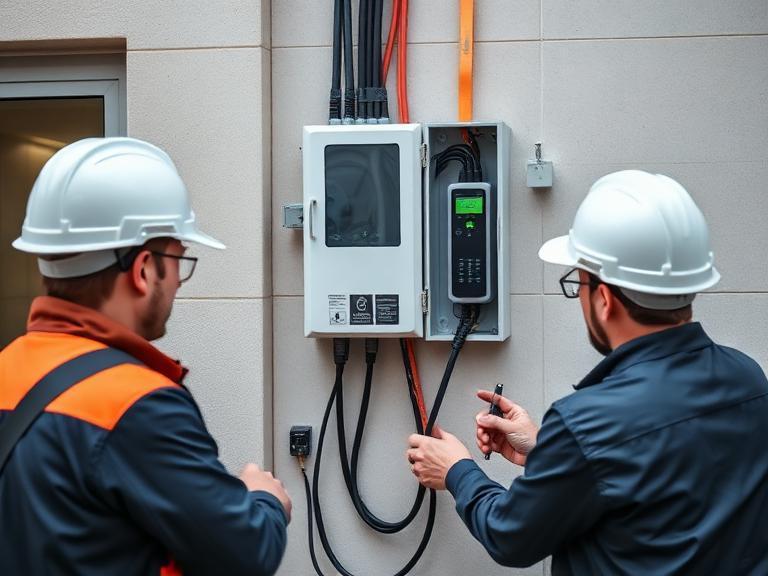
The shift toward electric mobility across Telangana has transformed EV infrastructure into a high-value real estate asset. As the metropolitan footprint expands through IT corridors like Cyberabad and financial hubs along the Outer Ring Road (ORR), securing reliable EV charging solutions in Hyderabad is now essential for commercial real estate developers, residential welfare associations (RWAs), corporate facility managers, and fleet operators.
Building an effective electric vehicle charging network requires a multi-faceted approach. Success depends on harmonizing electrical engineering, grid coordination with TGSPDCL (Telangana State Power Distribution Company Limited), compliance with national safety protocols (IS 17017 and CEA guidelines), and deploying scalable Charge Point Operator (CPO) software.
This guide breaks down every step of deploying commercial and private EV charging solutions in Hyderabad, detailing technical architectures, aggregation frameworks, financial ROI models, regulatory requirements, and operational strategies.
Market Dynamics Driving EV Infrastructure in Telangana
Hyderabad’s urban expansion, paired with the forward-looking Telangana EV and Energy Storage Policy, has positioned the state as a major hub for EV adoption in South India.
                          +-------------------------------------------------------------+
                          |   Telangana State EV Policy & Regulatory Support            |
                          +-------------------------------------------------------------+
                                                         |
        +--------------------------------+---------------+--------------------------------+
        |                                |                                                |
        v                                v                                                v
+-----------------------+    +-----------------------+    +----------------------------------+
| IT & Corporate Hubs   |    | Transit & Logistics   |    | High-Density Residential Hubs    |
| (HITEC City, Gachibowli|    | (ORR, Highways, Airpt)|    | (Kukatpally, Tellapur, LB Nagar) |
+-----------------------+    +-----------------------+    +----------------------------------+
        |                                |                                                |
        +--------------------------------+---------------+--------------------------------+
                                                         |
                                                         v
                          +-------------------------------------------------------------+
                          |    Turnkey EV Charging Infrastructure Requirement            |
                          +-------------------------------------------------------------+
Strategic Growth Pillars
- Corporate Fleet & Commuter Transformation: High-density commercial centers in HITEC City, Gachibowli, Kondapur, and the Financial District require corporate AC destination charging and employee fleet hubs.
- Transit Corridors & Highway Plazas: The 158 km Nehru Outer Ring Road (ORR) and connecting national highways (NH 65, NH 44) demand high-capacity DC fast-charging hubs for intercity transit.
- High-Rise Residential Integration: Expanding suburban communities in Tellapur, Neopolis, Narsingi, Miyapur, and LB Nagar require multi-point smart AC wallbox chargers with individual user billing.
- Last-Mile & Commercial Logistics Electrification: E-commerce fulfillment hubs near Shamshabad, Cherlapally, and Patancheru depend on high-uptime fleet charging depots.
End-to-End Components of Turnkey EV Charging Solutions
A complete EV charging solution in Hyderabad addresses every technical requirement, moving from initial electrical feasibility studies to long-term CPO network operations.
1. Site Engineering & Load Sanctioning
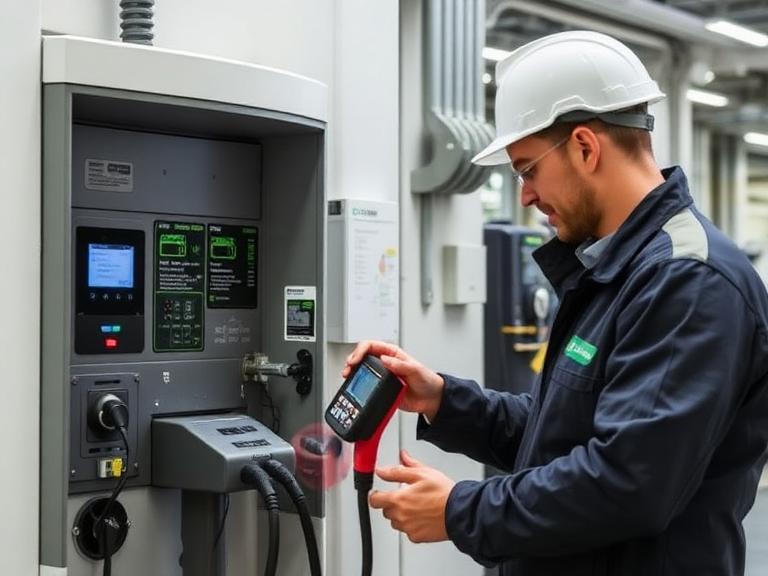
Before mounting hardware, engineers assess the site’s transformer margin, peak demand patterns, earthing pit resistance ($< 1\,\Omega$), surge protection requirements, and cabling distances. Providers coordinate directly with TGSPDCL to secure dedicated EV tariffs or necessary transformer upgrades.
2. Supply of Certified AC & DC Charging Hardware
Hardware must be tested by ARAI and comply with BIS (IS 17017 / IEC 61851) standards. Equipment ranges from 3.3 kW AC chargers for light EVs to 360 kW dual-gun CCS2 DC chargers for commercial transport.
3. Civil, Structural & Electrical Infrastructure
Execution involves constructing weatherproof steel canopies, cable trenching, busbar installation, Type B residual current circuit breaker (RCCB) panel mounting, and installing physical protective barriers.
4. Cloud CPO & Aggregator Software Setup
Connecting chargers to a Central Management System (CMS) via Open Charge Point Protocol (OCPP 1.6J or 2.0.1) allows property owners to monitor energy consumption, control dynamic load allocation, adjust pricing tariffs, and automate payments.
5. Proactive Operations & Annual Maintenance (AMC)
Maintaining reliable operations requires 24/7 automated monitoring, firmware management, preventative field inspections, and fast-turnaround field support with spare parts stocked locally in Hyderabad.
Technical Specifications: AC vs. DC Charging Solutions
| Charger Category | Power Output | Connector Type | Primary Use Case | Recommended Hyderabad Locations |
| AC Slow Charger (Level 1) | 3.3 kW – 7.4 kW | IEC 60309 / Type 1 | Overnight home charging, light 2W/3W fleets | Residential apartments in Miyapur, Kukatpally |
| AC Fast Charger (Level 2) | 11 kW – 22 kW | Type 2 (IEC 62196-2) | Workplace charging, long-stay retail parking | IT Parks in HITEC City, Commercial towers in Gachibowli |
| DC Fast Charger (Level 3) | 30 kW – 60 kW | Dual Gun CCS2 / CHAdeMO | Rapid commercial charging, retail centers | Shopping malls in Punjagutta, Begumpet, Secunderabad |
| DC Ultra-Fast Charger | 120 kW – 360 kW | Dual Gun CCS2 | Highway transit plazas, heavy commercial fleets | ORR Exits, Shamshabad Airport corridor, Patancheru |
CPO Software & Network Aggregation Services
An advanced EV charging solution in Hyderabad includes a Cloud-based Charge Point Operator (CPO) software suite that links hardware to central discovery and payment networks.
Core Functions of the CPO Aggregation Engine
- Cross-Platform Visibility: Lists stations on public charger maps and navigation systems, ensuring high visibility for passing motorists across Hyderabad.
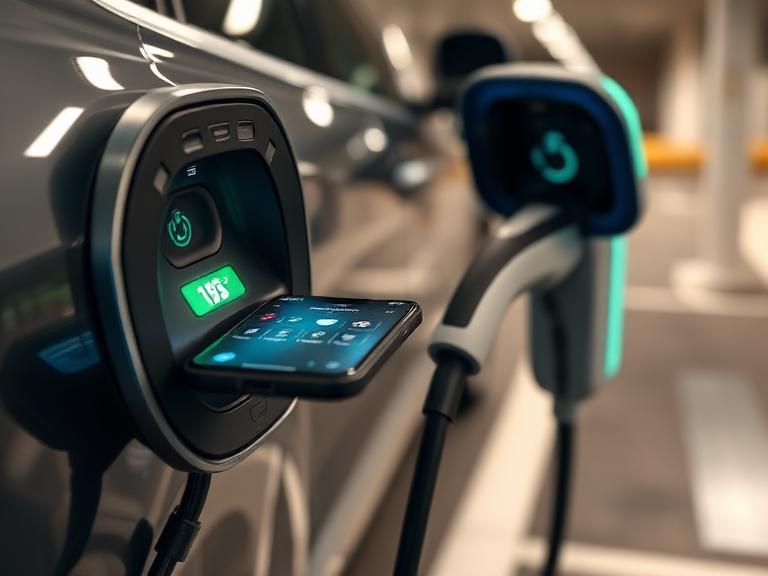
- Automated Multi-Modal Payments: Integrates direct payment gateways supporting UPI, debit/credit cards, mobile wallets, and RFID cards for automatic authorization.
- Dynamic Load Management (DLM): Continuously balances real-time power distribution across multiple charging guns to stay within the building’s maximum sanctioned capacity, avoiding expensive peak demand penalties.
- Tiered Tariff Configuration: Configures custom rates (e.g., base energy cost + overhead markup for public users versus discounted tariffs for residents or tenants).
- Automated Revenue Settlement: Provides real-time visibility into kilowatt-hours dispensed, total session duration, net profit margins, and automated weekly bank payouts.
Specialized Deployment Models by Sector
1. Residential Communities & Gated Apartments (RWAs)
- Challenge: Managing shared power infrastructure, preventing energy theft, and simplifying individual resident billing.
- Solution: Multi-point AC wallboxes with RFID access cards or app authentication. Power usage is billed directly to the user’s mobile wallet, automatically reimbursing the society’s master account.
2. Corporate Campuses & Business Parks
- Challenge: High daytime charging demand without overloading main building electrical transformers.
- Solution: Smart 11 kW and 22 kW AC destination chargers equipped with Dynamic Load Management (DLM) and corporate SSO integration. Supports sustainability reporting for LEED and IGBC certifications.
3. Retail Malls, Entertainment Centers & Hotels
- Challenge: Increasing customer dwell time while generating recurring revenue from underutilized parking spots.
- Solution: 30 kW to 120 kW DC fast chargers installed in high-visibility parking bays. Integrated touchscreens display promotional offers for surrounding shops and restaurants.
4. Commercial Fleets & Logistics Hubs
- Challenge: Maximizing fleet uptime with quick charging turnarounds for delivery vans, ride-hailing cars, and buses.
- Solution: High-capacity 120 kW to 240 kW DC fast-charging stations with dedicated step-down transformers, automated fleet management software, and scheduled overnight charging profiles.
Step-by-Step Implementation Strategy
  +-----------------------------------------------------------------------------------+
  | Phase 1: Site Audit & Feasibility                                                 |
  | Conduct electrical load check, transformer capacity evaluation & TGSPDCL approval.  |
  +-----------------------------------------------------------------------------------+
                                            |
                                            v
  +-----------------------------------------------------------------------------------+
  | Phase 2: Design & Engineering                                                     |
  | Select ARAI/BIS hardware, draft CAD layout, plan earthing & safety protection.    |
  +-----------------------------------------------------------------------------------+
                                            |
                                            v
  +-----------------------------------------------------------------------------------+
  | Phase 3: Civil & Electrical Execution                                             |
  | Cable trenching, panel mounting, earthing pits, and pedestal installation.         |
  +-----------------------------------------------------------------------------------+
                                            |
                                            v
  +-----------------------------------------------------------------------------------+
  | Phase 4: Software Integration & Testing                                           |
  | Configure OCPP CMS, connect payment gateway, run safety stress tests.              |
  +-----------------------------------------------------------------------------------+
                                            |
                                            v
  +-----------------------------------------------------------------------------------+
  | Phase 5: Live Launch & Network Aggregation                                        |
  | Publish station on public maps, activate 24/7 monitoring and AMC support.          |
  +-----------------------------------------------------------------------------------+
1.Site Audit & Load Feasibility:Grid Assessment & TGSPDCL Coordination.
Engineers evaluate current transformer limits, cable routes, and earth pit locations ($< 1\,\Omega$). Formal applications are submitted to TGSPDCL for specialized EV tariffs or required load increases.
2.System Architecture & Layout Design:Safety Protocols & CAD Blueprinting.
Hardware selection aligns with site usage goals. Civil engineers draft CAD site plans detailing safety clearance, fire suppression systems, cable trays, and weatherproof canopy designs.
3.Civil & Electrical Infrastructure:Foundation, Cabling & Protection Panels.
Teams dig trenches, lay armored copper or aluminum power cables, mount isolation transformers, install Type B RCCB protection panels, and set up earthing systems.
4.CPO Configuration & Commissioning:OCPP Setup & Payment Integration.
Chargers connect to the Cloud CMS using cellular or Ethernet connections via OCPP 1.6J/2.0.1 protocols. Teams test RFID authorization, payment gateway processing, emergency stops, and load balancing.
5.Network Launch & Operational AMC:Public Visibility & Ongoing Maintenance.
The station goes live on major navigation apps and charging aggregators. Ongoing operation is backed by 24/7 remote diagnostic monitoring and local field technician service.
Business Models for EV Infrastructure Ownership
Choosing the right operating model depends on your capital strategy, technical resources, and operational goals:
Ownership Matrix
| Operational Parameter | CAPEX Model (Turnkey Client-Owned) | Revenue Share / Joint Venture | OPEX Model (Land Lease) |
| Capital Expenditure | 100% Client Funded | Shared between Owner & Provider | 0% Capital Investment for Landowner |
| Hardware Ownership | Property Owner | Joint Ownership | Service Provider |
| Maintenance & Servicing | Covered by Provider AMC | Fully Handled by Provider | Fully Handled by Provider |
| Revenue Allocation | Owner Retains ~85%–90% Net Profit | Agreed Ratio (e.g., 50/50 or 60/40) | Fixed Monthly Rent or Per-kWh Royalty |
| Target Sector | Corporations, RWAs, Landowners | Malls, Restaurants, Fuel Outlets | Prime Commercial Land, Highway Corridors |
Commercial ROI Analysis: 60 kW DC Fast Charging Station
Here is a financial estimate for establishing a commercial 60 kW DC fast-charging station in a high-traffic area of Hyderabad (such as Gachibowli or near an ORR exit) under a turnkey CAPEX model:
Initial Investment Breakdown (CAPEX)
- 60 kW Dual-Gun CCS2 DC Fast Charger: ₹6,50,000
- Civil Infrastructure, Cabling, Earthing & Panels: ₹1,80,000
- Grid Connection & TGSPDCL Sanction Processing: ₹1,20,000
- Software Integration, Branding & Commissioning: ₹30,000
- Total Estimated Initial Investment: ₹9,80,000
Operating Assumptions
- Daily Energy Dispensed: $180\text{ kWh}$ (~5 to 6 vehicle sessions daily)
- Commercial EV Electricity Tariff: ₹8.00 per kWh
- Selling Price to End User: ₹18.00 per kWh
- Gross Profit Margin per kWh: $18.00 – 8.00 = \text{₹}10.00\text{ per kWh}$
Monthly Revenue & Profitability Projections
- Gross Monthly Sales: $180\text{ kWh/day} \times 30\text{ days} \times \text{₹}18.00/\text{kWh} = \text{₹}97,200$
- Cost of Power Consumed: $180\text{ kWh/day} \times 30\text{ days} \times \text{₹}8.00/\text{kWh} = \text{₹}43,200$
- Software CMS Platform & Maintenance Reserves (~10%): ₹9,720
- Net Monthly Operating Profit: $\text{₹}97,200 – (\text{₹}43,200 + \text{₹}9,720) = \text{₹}44,280$
- Net Annual Operating Profit: $\text{₹}44,280 \times 12 = \text{₹}5,31,360$
- Projected Payback Period: ~22 to 24 Months (assuming moderate 15% daily capacity utilization)
Frequently Asked Questions (FAQs)
1. What are the key benefits of deploying professional EV charging solutions in Hyderabad?
Professional EV charging solutions provide end-to-end management, including electrical feasibility checks, TGSPDCL load approvals, hardware installation, automated CPO software integration, and local AMC maintenance. This ensures high system safety and uptime without operational complexity for the property owner.
2. How much electricity load sanction is needed for a commercial DC fast charger?
A 60 kW dual-gun DC fast charger requires a sanctioned electrical load of roughly $65\text{ kVA}$ to $70\text{ kVA}$. AC chargers have lower demands; a standard 7.4 kW charger uses a single-phase $7.4\text{ kW}$ connection, while a 22 kW charger requires a three-phase $22\text{ kW}$ supply.
3. Can gated apartment communities in Hyderabad install smart chargers for residents?
Yes. Apartment setups typically use multi-point AC chargers integrated with RFID cards or app-based authentication. The system tracks individual resident electricity usage and collects payments automatically, reimbursing the housing society’s utility bill.
4. What is the average timeline to install a public EV charging station in Hyderabad?
Standard AC wallbox installations for homes or workplaces take 1 to 2 business days. Setting up a commercial DC fast-charging hub—including transformer additions, civil work, cabling, safety testing, and software integration—generally takes 10 to 20 days.
5. What is OCPP compliance and why is it critical for EV chargers?
Open Charge Point Protocol (OCPP) is the open industry standard for communication between EV charger hardware and Cloud management software. Choosing OCPP-compliant hardware (such as OCPP 1.6J or 2.0.1) prevents vendor lock-in, allowing you to change software providers freely in the future.
6. How do property owners generate revenue from public EV charging stations?
Property owners set a per-kWh charging rate higher than their local commercial electricity tariff. When EV drivers charge using an app or card payment, the system processes the transaction, covers the utility cost, and deposits net profits into the owner’s bank account.
7. Does Telangana offer special power tariffs for EV charging stations?
Yes. TGSPDCL offers dedicated EV charging tariff categories for commercial charging setups. These rates are designed to keep operational costs low and encourage sustainable mobility infrastructure.
8. Which EV car models can use these chargers in Hyderabad?
All installations use standard connectors matching Indian EV models (including Tata, MG, Hyundai, Mahindra, and BYD). AC chargers feature standard Type 2 connectors, while DC fast chargers use universal dual-gun CCS2 connectors.
9. What safety features are required for public EV charging stations?
Compliant stations require Type B RCCBs, surge protection devices (SPD), primary and secondary circuit breakers, dedicated earthing pits ($< 1\,\Omega$), physical emergency stop buttons, and IP54 or IP65 weatherproof enclosures for outdoor installations.
10. How does CPO software help balance power consumption on busy properties?
CPO software features Dynamic Load Management (DLM). This automatically allocates available power across connected charging guns based on real-time grid constraints, protecting main building breakers during peak demand hours.
11. Can solar power systems be integrated with EV chargers in Hyderabad?
Yes. EV chargers can pair with rooftop solar PV installations or solar carports using hybrid grid-tied inverters. This reduces grid power dependency, cuts electricity costs, and offers true zero-emission charging.
12. What warranty and maintenance support comes with commercial EV chargers?
Industrial-grade chargers generally include a 1 to 3-year manufacturer warranty. Complete EV charging solutions also offer Annual Maintenance Contracts (AMC) covering 24/7 remote diagnostics, routine field inspections, and fast spare part replacement.
13. What is charger aggregation and how does it drive customer footfall?
Charger aggregation lists your charging station on central mobile applications and map engines. This allows EV drivers in Hyderabad to locate your station, check real-time charger availability, and navigate directly to your location.
14. How much physical parking space is needed for a fast-charging hub?
A dual-gun DC fast charger setup uses one standard vehicle parking bay ($2.5\,\text{m} \times 5\,\text{m}$) alongside a small $1\,\text{m} \times 1\,\text{m}$ concrete base for the charger cabinet and electrical breaker panel.
15. How are driver payment failures or charging interruptions handled?
Integrated CPO software includes 24/7 automated support and local customer service helplines listed on the station UI. Technicians can remotely restart charging sessions, release locked cable connectors, or process instant user refunds.
Leave a Reply