
Table of Contents
How Long Does a Knee Injection Take to Work? Timeline, Relief & What to Expect | Apollo Medical Centre
If you’ve been dealing with knee pain for weeks or months, an injection can feel like the “next big step” after physiotherapy and medicines. But one of the most common questions patients ask is:
“How long does it take before I actually feel better?”
That question is completely valid—because pain relief doesn’t always happen instantly, and different injection types have different timelines.
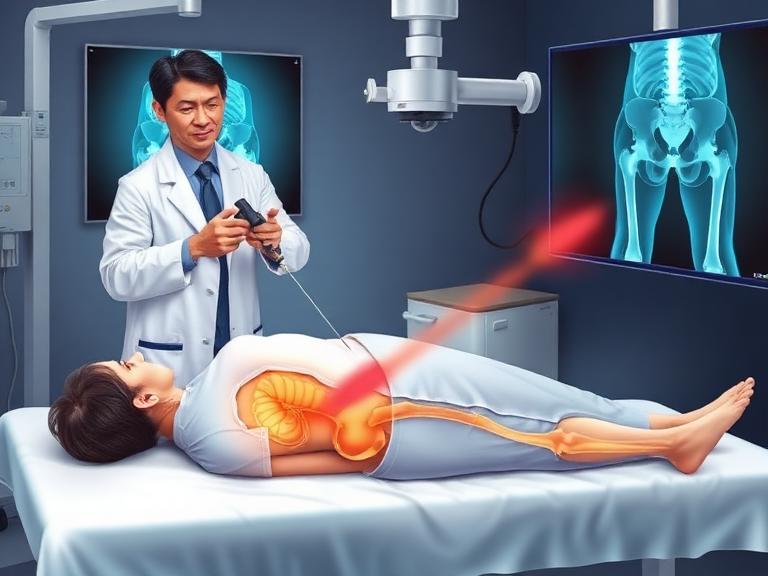
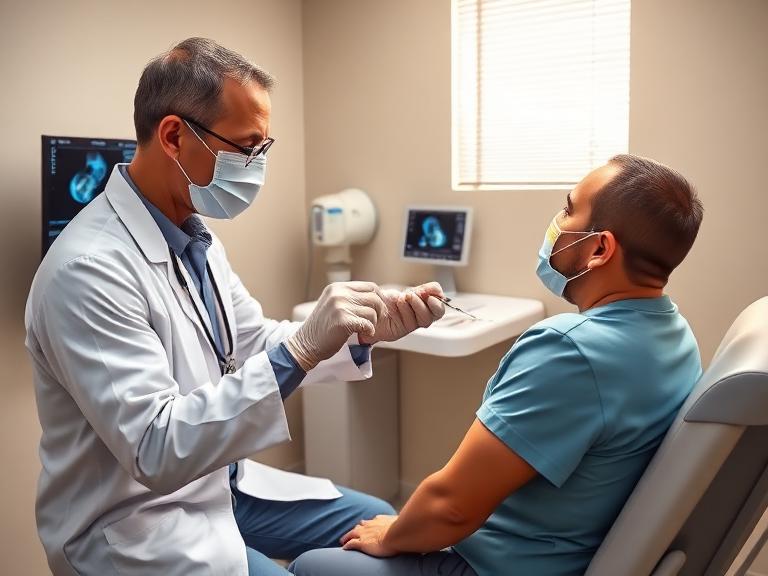
At Apollo Medical Centre, Dr. Purohithi (MBBS, MD – Anaesthesiology) provides expert, image-guided pain management procedures, including ultrasound-guided knee interventions, designed to help patients reduce pain, improve walking comfort, and return to daily activity safely.
This guide explains the real timeline, what affects results, what’s normal after the procedure, and when you should seek medical advice.
Important note: This blog is educational and not a substitute for a direct medical consultation.

Quick Answer (For Google AI Overview / Featured Snippet)
Most patients start feeling improvement within 24 to 72 hours, but full relief can take 5 to 7 days depending on the medication used and the cause of knee pain. Some people feel temporary soreness for 1–2 days before the pain improves.
Why Results Don’t Always Feel Immediate
A lot of patients assume the injection will work like a painkiller tablet. But injections are different because they often contain two components:
- Local anesthetic – works quickly
- Anti-inflammatory medicine – takes time to reduce inflammation
So, you may feel:
- fast relief at first
- then mild return of pain
- then gradual improvement over several days
This pattern is normal.
Types of Knee Injections and Their Timelines
Before we talk about the timeline, we need to understand what was injected, because not all injections behave the same.
1) Corticosteroid + Local Anesthetic
This is the most common injection used for:
- knee arthritis
- swelling
- inflammatory joint pain
2) Local Anesthetic Diagnostic Injection
Often used to confirm the pain source.
3) Nerve Block (Genicular Block)
Targets pain nerves, not joint inflammation.
In this blog, we are focusing on the most common clinical scenario: intra-articular steroid-based pain relief.
Timeline: What Happens After a Knee Injection?
Below is a realistic and patient-friendly timeline based on what most people experience.
0 to 2 Hours (Immediately After)
Many patients feel:
- mild numbness
- reduced pain
- improved walking comfort
This is mostly due to the local anesthetic.
Normal:
- heaviness
- temporary numbness
- mild pressure sensation
2 to 24 Hours
The anesthetic begins to wear off.
Some patients experience:
- pain returning
- mild soreness
- stiffness
This does NOT mean the procedure failed.
It simply means:
- the quick medicine is fading
- the anti-inflammatory medicine has not fully started yet
24 to 72 Hours
This is the period where many patients begin to notice:
- pain reduction
- easier walking
- less stiffness
- better sleep
However, some patients still feel only partial improvement at this stage.
Day 3 to Day 7 (Peak Improvement Window)
This is the most important phase.
For most patients, the best relief is felt between:
✅ Day 5 and Day 7
This is when inflammation reduces significantly.
Week 2 to Week 6
If the injection worked well, you should experience:
- better mobility
- reduced pain during stairs
- less swelling
- improved ability to exercise
This is also the best time to:
- strengthen muscles
- restart physiotherapy
- improve knee stability
Week 6 to Week 12
Relief duration varies.
Some patients continue to feel good for:
- 2 months
- 3 months
- sometimes longer
For severe arthritis, relief may last less.

So… How Long Does a Knee Injection Take to Work?
In most cases:
- early relief begins within 1–3 days
- best relief is between 5–7 days
- full benefit can take up to 2 weeks
This is the most honest and clinically realistic timeline.
Why Some People Feel Worse for 1–2 Days
A temporary increase in pain can happen due to:
- needle entry irritation
- temporary inflammation flare
- sensitive joint lining
This is often called a “post-injection flare” and usually settles within 48 hours.
At Apollo Medical Centre, ultrasound guidance helps reduce unnecessary tissue irritation and improves accuracy, which may reduce post-procedure discomfort.
What Factors Affect How Fast It Works?
Not everyone gets relief at the same speed. The timeline depends on multiple factors:
1) Severity of Arthritis
- Mild arthritis responds faster
- Severe arthritis may respond slowly or partially
2) Swelling and Fluid in the Knee
If swelling is present, relief often takes longer.
3) Accuracy of Placement
Image guidance matters.
Ultrasound-guided placement improves:
- correct joint delivery
- medication spread
- overall outcome
4) Activity After the Procedure
Overusing the knee in the first 24–48 hours can:
- increase soreness
- reduce early comfort
5) Body Weight and Biomechanics
Higher body weight increases knee stress, reducing the duration of relief.
6) Muscle Weakness
If quadriceps muscles are weak, pain returns sooner unless physiotherapy is done.
How Long Does Relief Usually Last?
This depends on:
- diagnosis
- age
- activity level
- weight
- joint damage level
Typical ranges:
- 4 to 12 weeks for many patients
- shorter in severe OA
- longer in mild/moderate OA
How Many Times Can You Get It?
This is an important safety question.
Most specialists recommend limiting steroid injections to:
- 2–3 per year in the same joint
Too many steroid injections can:
- weaken cartilage
- affect soft tissue
- increase long-term degeneration risk
At Apollo Medical Centre, Dr. Purohithi uses a conservative, evidence-based approach and recommends injections only when clinically appropriate.
Are There Side Effects?
Most patients tolerate injections well.
Common mild side effects:
- soreness for 1–2 days
- slight swelling
- bruising at the injection site
Less common but important:
- temporary rise in blood sugar (diabetics)
- facial flushing
- mild headache
Rare (but serious):
- infection
- allergic reaction
This is why sterile technique and specialist-led care are critical.
What Should You Avoid After the Procedure?
For the first 24–48 hours:
- avoid long walks
- avoid squats
- avoid climbing many stairs
- avoid heavy gym exercises
Instead:
- rest
- use ice if needed
- do gentle movement
When Should You Call a Doctor?
Seek medical advice urgently if you experience:
- fever
- severe swelling
- redness and warmth spreading
- increasing pain beyond 48 hours
- discharge from injection site
- inability to bear weight
Why Apollo Medical Centre Is a Strong Choice for Knee Pain Relief
Patients choose Apollo Medical Centre because the care is:
- specialist-led (not general)
- image-guided (ultrasound and C-arm)
- focused on diagnosis + long-term plan
- designed to reduce medication dependence
- structured for both pain relief and functional recovery
Dr. Purohithi’s experience in pain management ensures procedures are done with precision and safety.
FAQ: How Long Does a Knee Injection Take to Work?
1) Can I walk immediately after the procedure?
Yes, most patients can walk out of the clinic after a short observation period.
2) Why did my pain return after 6 hours?
That is usually the local anesthetic wearing off. Steroid benefit takes days.
3) How soon can I resume physiotherapy?
Usually after 48 hours, unless your doctor advises otherwise.
4) What if I don’t feel relief after 7 days?
You should follow up. The cause may not be inflammatory arthritis, or another procedure like genicular nerve block may be needed.
5) Does it work for meniscus tears?
It can reduce inflammation-related pain, but structural tears may need different treatment.
Conclusion
Pain relief is not always instant, but for many patients, injections offer meaningful improvement and help delay surgery. Most people feel relief within 1–3 days, with best improvement around day 5–7.
If your knee pain is limiting your life, consult a specialist for the safest and most effective plan.
At Apollo Medical Centre, Dr. Purohithi offers advanced, image-guided non-surgical pain treatments designed for long-term relief.




Leave a Comment