
Table of Contents
Ultimate Guide to Certified EV Charging Station Installers (2026)
The rapid transition toward electric mobility requires robust, safe, and scalable charging infrastructure. Behind every seamless charging session—whether at a private single-family residence, a high-density multi-dwelling unit (MDU), a corporate office campus, or an interstate commercial transport depot—lies the technical expertise of certified EV charging station installers.
Installing Electric Vehicle Supply Equipment (EVSE) is far more complex than standard residential or commercial wiring. EV charging represents a continuous, high-amperage electrical draw sustained over hours or days. A minor flaw in conductor sizing, circuit protection, grounding resistance, or thermal management can cause equipment failure, void hardware warranties, or create severe fire hazards.
This comprehensive operational guide details the technical standards, installer selection criteria, regulatory compliance steps, cost structures, and deployment protocols necessary for successful EV charging station projects.
1. Why Hiring Specialized EV Charging Station Installers Is Mandatory
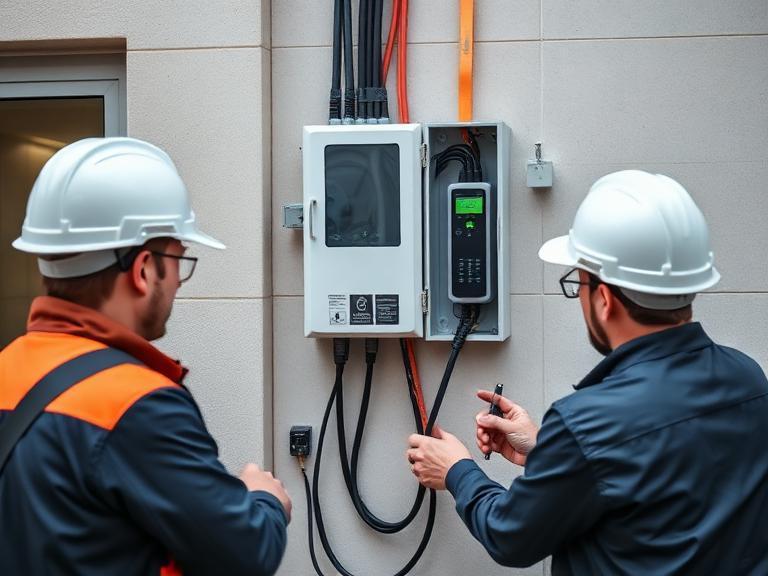
While licensed general electricians handle routine building wiring, high-power EVSE deployment requires specialized training in continuous load dynamics, grid interconnections, communications networking, and utility compliance.
  TRADITIONAL ELECTRICAL WIRING              SPECIALIZED EVSE INSTALLATION
+---------------------------------+        +---------------------------------+
| * Intermittent load profile     |        | * Continuous 100% max load draw |
| * Standard thermal duty cycles  |   VS   | * Extended multi-hour duty      |
| * Basic circuit breakers        |        | * Type B DC-leakage protection  |
| * Local distribution focus      |        | * Grid communication & OCPP     |
| * Simple point-to-point wiring  |        | * Dynamic Load Management (DLM) |
+---------------------------------+        +---------------------------------+
The 125% Continuous Load Requirement
Under national electrical safety standards (including NEC Article 625 and IEC 61851), EVSE is classified as a continuous load. An electrical load is defined as continuous if the maximum current is expected to continue for 3 hours or more.
Consequently, the branch circuit conductor and overcurrent protection device (OCPD) must be rated for at least 125% of the charger’s maximum current draw.
$$\text{Circuit Breaker Rating} = \text{EVSE Continuous Current} \times 1.25$$
Example: A 32-Amp Level 2 charger requires a dedicated circuit breaker rated for:
$$32\text{ A} \times 1.25 = 40\text{ Amps}$$
An inexperienced installer who fails to calculate this continuous rating risks nuisance breaker tripping, insulation melting, and thermal fires.
2. Technical Spectrum of EVSE Installations
Qualified EV charging station installers work across three distinct power tiers, each presenting unique engineering demands.
| Parameter | Level 2 AC (Standard) | Level 2 AC (High-Power) | DC Fast Charging (DCFC) | Megawatt Charging (MCS) |
| Voltage Supply | 208V – 240V 1-Phase | 400V – 415V 3-Phase | 480V – 415V 3-Phase | 800V – 1250V DC |
| Power Output | 3.3 kW to 9.6 kW | 11 kW to 22 kW | 50 kW to 350 kW | 1,000 kW (1 MW) to 3.75 MW |
| Current Range | 16A to 40A | 16A to 32A per phase | 80A to 500A DC | Up to 3,000A DC |
| Conductor Size | 6 sq mm to 10 sq mm | 6 sq mm to 16 sq mm | 35 sq mm to 240 sq mm | Liquid-cooled busbars / specialized leads |
| Typical Site | Homes, MDU bays | Workplaces, retail | Fleet hubs, highway corridors | Heavy-duty logistics, ports, mining |
+------------------------------------------------------------------------------------+
|                         EV CHARGER HARDWARE TOPOLOGY                               |
+------------------------------------------------------------------------------------+
  [ Grid Transformer ]
           |
           v
  [ Main Switchboard / Panel ] ---> [ Dedicated EV Sub-Panel ]
                                                |
                                                v
                                  [ Continuous 125% MCB ]
                                                |
                                                v
                                  [ Type B RCCB / RCD (30mA) ]
                                                |
                                                v
                                  [ Class II Surge Protection ]
                                                |
                                                +---> [ Dedicated Earth Pit (<5Ω) ]
                                                |
                                                v
                                  [ Armored Feeder Cable ]
                                                |
                                                v
                                  [ EVSE Wallbox / Pedestal ]
3. Scope of Work Across Property Sectors
Professional installers adapt their approach to the operational demands of different property types:
Single-Family Residential (Homeowners & Estates)
- Objective: Overnight charging, utility time-of-use (ToU) cost optimization, solar coupling.
- Installer Tasks: Main service panel load calculation, mounting 7.4 kW to 11 kW wallbox, short-run conduit installation, dedicated earthing, smart app pairing.
Multi-Family Residential (Apartments, MDUs, Condos)
- Objective: Shared amenity charging, tenant access control, automated cost recovery.
- Installer Tasks: Extended armored cable routing through subterranean parkades, installation of central distribution panels, deployment of OCPP management software, setting up RFID reader networks.
Commercial & Workplace Real Estate
- Objective: Dwell-time monetization, employee perk provision, green building certification (LEED/BREEAM).
- Installer Tasks: Pedestal mounting, concrete trenching and bollard protection, ADA/accessibility compliance, dual-port Level 2 deployment, payment gateway integrations.
Heavy Fleets & Public Transit Depots
- Objective: Rapid turnaround, scheduled depot charging, high-uptime reliability.
- Installer Tasks: Substation upgrades, pad-mounted transformer installation, liquid-cooled DC fast charger deployment, battery buffer (BESS) integration, microgrid controls.
4. Key Qualifications & Accreditations to Demand
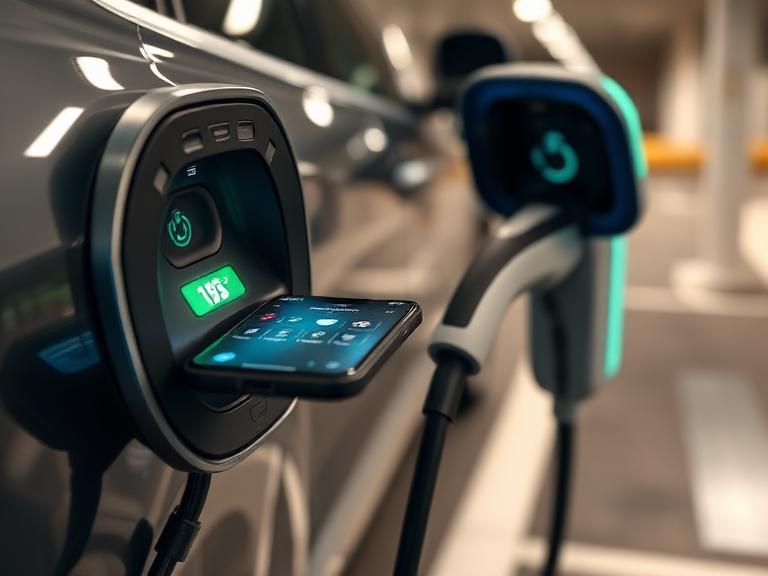
When evaluating EV charging station installers, property managers and procurement teams must demand documented certifications:
Installer Verification Checklist:
- Electrical License: Master Electrician or Licensed Electrical Contractor status in the local jurisdiction.
- EVSE Accreditation: EVITP (Electric Vehicle Infrastructure Training Program) certification or equivalent national EVSE technical credentials.
- OEM Authorizations: Direct installation certification from leading charger manufacturers (e.g., ChargePoint, Tesla Authorized Commercial Installer, ABB, Kempower, Tritium, Siemens).
- Safety & Insurance: Minimum $2 Million to $5 Million Commercial General Liability insurance, workers’ compensation coverage, and OSHA 30-hour safety training.
- Turnkey Capability: Proven track record in handling permitting, utility interconnection queues, civil trenching, and software integration.
5. End-to-End Installation Workflow
Top-tier EV charging station installers follow a structured six-phase engineering pipeline:
1.Site Feasibility Audit & Load Analysis:Phase 1: Diagnostic Assessment.
Installers perform on-site electrical measurements, verify transformer service capacity, inspect panel busbar ratings, assess earthing resistance, measure ambient thermal conditions, and map cable pathways.
2.Civil & Electrical System Design:Phase 2: Engineering Blueprint.
Engineers develop single-line diagrams (SLDs), conduct voltage drop calculations for long runs, formulate site layout plans including bollard placements, and design trenching/conduit pathways.
3.Permitting & Utility Interconnection:Phase 3: Regulatory Approval.
The team submits electrical plans to the local building authority (AHJ) and submits load enhancement requests to the local electric utility company (DISCOM).
4.Civil Construction & Infrastructure Prep:Phase 4: Site Groundwork.
Crews execute asphalt cutting, trenching, conduit laying, concrete pad pouring for pedestals/transformers, and install protective steel safety bollards.
5.Electrical Wiring, Hardwiring & Mounting:Phase 5: Core Installation.
Technicians pull armored copper/aluminum feeders, mount wallboxes or pedestals, land cables on dedicated MCBs, install Type B RCD protection, establish dedicated earthing, and hardwire the charger.
6.Commissioning, OCPP Network Sync & Testing:Phase 6: Final Validation.
Engineers test earth ground impedance (<5 Ohms), run insulation resistance tests, verify trip functions, commission OCPP network communications, execute live test charges, and secure final inspector sign-off.
6. Electrical Safety, Earthing, and Protection Code Compliance
Safety compliance forms the core of professional EVSE installation. Installers must strictly observe international and regional electrical safety standards (NEC 625, IEC 61851, BS 7671 Section 722).
1. Residual Current Devices (RCD / RCCB)
Electric vehicles can introduce smooth DC leakage current back into the AC distribution grid during conversion. Standard Type A or Type AC RCDs can become “blinded” by DC leakage currents above 6mA, preventing them from tripping during a dangerous fault.
- Mandatory Requirement: Installers must fit either a Type B RCD or a Type A RCD combined with a 6mA DC residual direct current detecting device (RDD-MD).
2. Earthing Protocols & Neutral-Earth Voltage Control
EV chargers continuously sense earth loop impedance before closing internal contactors.
- Earth Resistance Limit: Total earthing system resistance must be maintained below 5 Ohms (ideally < 2 Ohms).
- PME / TN-C-S Considerations: In regions utilizing Protective Multiple Earthing (PME), installers must deploy PEN (Protective Earth Neutral) fault detection devices or establish isolated TT earthing pits to eliminate the risk of electric shocks on touch points if an open PEN fault occurs on the grid.
3. Surge Protection Devices (SPD)
Transient overvoltages caused by atmospheric lightning or utility switching can destroy delicate onboard chargers (OBC) inside electric vehicles.
- Mandatory Requirement: Type 2 Surge Protection Devices must be installed inside the dedicated EV distribution board.
+------------------------------------------------------------------------------------+
|                         MANDATORY SAFETY SWITCHGEAR LAYER                          |
+------------------------------------------------------------------------------------+
|                                                                                    |
|  [ Main Board ] --> [ 125% Rated MCB ] --> [ Type B RCD ] --> [ Class II SPD ]    |
|                                                                      |             |
|                                                                      v             |
|                                                            [ Chemical Earth Pit ]  |
|                                                                  (< 5 Ohms)        |
+------------------------------------------------------------------------------------+
7. Cost Breakdown for Hiring Professional EV Charger Installers
Project expenses depend on charger type, civil trenching needs, electrical distance, and utility upgrades.
Commercial Cost Estimate Matrix
| Cost Component | Commercial Level 2 (Dual Port) | DC Fast Charger (50 kW) | DC Ultra-Fast (150 kW – 350 kW) |
| EVSE Hardware Cost | $2,500 – $7,000 | $20,000 – $40,000 | $60,000 – $160,000 |
| Electrical Cable & Conduit | $1,200 – $3,500 | $3,500 – $8,000 | $8,000 – $25,000 |
| Protection Panels & Switchgear | $800 – $2,000 | $4,000 – $10,000 | $15,000 – $35,000 |
| Civil Works (Trenching/Pads) | $1,500 – $5,000 | $5,000 – $18,000 | $12,000 – $45,000 |
| Utility Transformer Upgrade | $0 – $5,000 (if needed) | $10,000 – $35,000 | $30,000 – $100,000+ |
| Labor, Permitting & Testing | $1,500 – $4,000 | $6,000 – $15,000 | $15,000 – $35,000 |
| Estimated Total Project Cost | $7,500 – $21,500 | $48,500 – $116,000 | $140,000 – $400,000+ |
8. Smart Charging: Dynamic Load Management, OCPP & Solar Integration
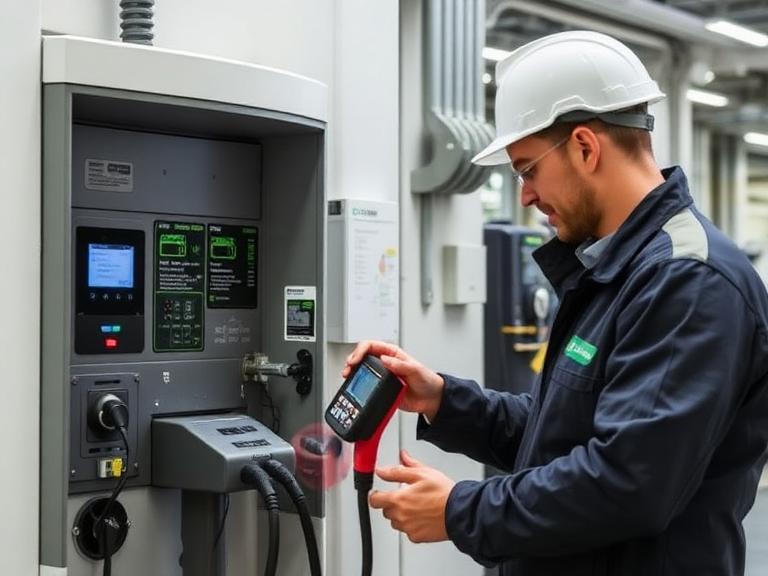
Modern installers provide advanced smart charging integration alongside physical hardware installation:
Dynamic Load Management (DLM)
Property owners often face capped grid electrical capacity. Instead of spending tens of thousands on transformer expansions, installers implement DLM.
- How It Works: DLM monitors real-time building power consumption using Current Transformer (CT) sensors. When the building’s main power draw increases, DLM automatically dials back EVSE power delivery, ramping charging speeds back up when building load drops.
Open Charge Point Protocol (OCPP)
OCPP is the open-source industry standard for communication between EV chargers and central management platforms. Installers provision chargers using OCPP 1.6J or OCPP 2.0.1 to allow property owners to:
- Set flexible pricing structures (per kWh, per hour, driver tiers).
- Manage tenant authentication via mobile apps or RFID cards.
- Monitor real-time uptime, diagnostic codes, and energy usage logs.
Solar Microgrid Coupling
Installers can connect EV charging systems directly with rooftop solar PV and Battery Energy Storage Systems (BESS). By using smart energy management controllers, EV chargers can draw purely surplus solar power, delivering zero-emission driving while eliminating grid demand charges.
+------------------------------------------------------------------------------------+
|                         DLM & SOLAR INTEGRATION SCHEMATIC                          |
+------------------------------------------------------------------------------------+
                                 [ Rooftop Solar PV ]
                                          |
                                          v
   [ Main Grid Supply ] ----> [ CT Sensor / DLM Controller ] <---- [ BESS Battery ]
                                          |
                                          v
                         [ Dynamic EVSE Load Controller ]
                                          |
                   +----------------------+----------------------+
                   |                                             |
                   v                                             v
        [ EV Charger Slot #1 ]                        [ EV Charger Slot #2 ]
        (Auto-Adjusted Power)                         (Auto-Adjusted Power)
9. Frequently Asked Questions (FAQs)
Q1: Why should I hire certified EV charging station installers instead of a general electrician?
Certified EV charging station installers hold specialized credentials in high-amperage continuous loads (NEC Article 625 / IEC 61851), Type B RCD selection, dedicated chemical earthing, utility load approval queues, Dynamic Load Management (DLM), and OCPP software provisioning. General electricians often lack specialized training in EV load dynamics, leading to potential breaker trips, voided hardware warranties, or regulatory delays.
Q2: How much does it cost to hire professional EV charging station installers?
For residential Level 2 chargers, installation labor and basic materials cost between $500 and $2,500. Commercial Level 2 dual-port stations cost $3,500 to $12,000 per port for turnkey installation. DC Fast Charger installations (50 kW to 350 kW) range from $20,000 to over $150,000 per unit, depending on transformer upgrades, utility queues, and trenching distances.
Q3: What electrical upgrades are required for a 7.4 kW or 11 kW home EV charger?
A 7.4 kW single-phase charger requires a dedicated 40-Amp 2-pole circuit breaker wired with 6 sq mm (8/10 AWG) copper conductors. An 11 kW charger requires a 3-phase connection with a 20-Amp 3-pole breaker. If your property’s electrical panel lacks sufficient available capacity, your installer will coordinate a main panel or service load enhancement with your electric utility.
Q4: Do EV charging station installers handle local permits and utility approvals?
Yes. Turnkey installers handle all regulatory paperwork, including municipal electrical and building permits, utility load assessment filings (DISCOM), transformer site plans, ADA/accessibility compliance filings, and final inspection sign-offs.
Q5: What certifications should top EV charging station installers hold?
Look for Master or Licensed Journeyman Electricians with EV-specific accreditations such as EVITP (Electric Vehicle Infrastructure Training Program), OEM-authorized certifications (e.g., ChargePoint Certified, Tesla Commercial Authorized, ABB Certified), OSHA safety compliance, and robust commercial liability insurance.
Q6: How long does the installation of an EV charging station take?
A standard residential Level 2 charger installation with short cable runs takes 3 to 5 hours. Commercial Level 2 installations typically take 2 to 5 days. Complex DC Fast Charging projects requiring concrete pads, trenching, and utility transformer upgrades can take 4 weeks to 6 months, largely depending on utility interconnection queue timelines.
Q7: Can EV charging station installers set up charging stations in apartment basements?
Yes. Installers configure multi-dwelling unit (MDU) charging by pulling heavy-duty armored cables along subterranean cable trays from central meter rooms to individual parking bays. They also deploy OCPP software networks or smart sub-meters for automated tenant billing and access control.
Q8: What cable size is required for long distance runs in commercial parking garages?
For long cable runs exceeding 30 meters (100 feet), voltage drop calculations dictate conductor sizing. Installers upsize standard 6 sq mm (8 AWG) conductors to 10 sq mm, 16 sq mm, or 25 sq mm (4 AWG to 1/0 AWG) copper/aluminum armored cable to ensure voltage drop remains below 3% under full continuous load.
Q9: What circuit safety devices are mandatory during EV charger installation?
Mandatory safety devices include a dedicated Miniature Circuit Breaker (MCB) rated for 125% of continuous load, a Type B or AC/DC sensitive Residual Current Device (RCD/RCCB) operating at 30mA, a Type 2 Surge Protection Device (SPD), and a dedicated chemical earthing system maintaining ground resistance below 5 Ohms.
Q10: What is Dynamic Load Management (DLM) and why do installers recommend it?
Dynamic Load Management (DLM) monitors total real-time energy usage across a building using current sensors. When building electrical demand spikes (e.g., central HVAC activation), DLM automatically reduces EV charging speeds to keep total demand within safe building thresholds, avoiding main breaker trips and expensive utility demand charges.
Q11: Can an installer connect my EV charging station to solar panels?
Yes. Specialized installers integrate smart EV wallboxes directly with solar PV arrays and Battery Energy Storage Systems (BESS). Smart energy management systems monitor solar production and adjust charging output to store surplus solar power directly into your EV battery.
Q12: What is the difference between hardwired EV chargers and plug-in chargers?
Hardwired chargers connect directly from the electrical panel into the charger terminals, enabling maximum continuous power output (up to 48A–80A on AC), high weatherproofing, and commercial code compliance. Plug-in chargers use 240V industrial outlets (such as NEMA 14-50 or IEC 60309 sockets), offering portability but capping continuous current at 32A or 40A.
Q13: What happens if my building does not have enough power capacity for EV chargers?
If building power is constrained, installers can: (1) Request a utility transformer and main service panel load expansion, (2) Deploy Dynamic Load Management (DLM) to share available capacity safely, or (3) Install a Battery Energy Storage System (BESS) to buffer high-power charging demands.
Q14: Are there government grants or utility rebates available for hiring EV charger installers?
Yes. Government policies and local utilities offer grants, tax credits (such as US Section 30C), and “make-ready” utility rebate programs covering 30% to 100% of EVSE hardware, civil trenching, panel upgrades, and labor costs. Turnkey installers routinely assist with rebate paperwork.
Q15: How do I maintain my EV charging stations after professional installation?
Installers offer ongoing Service Level Agreements (SLAs) including periodic thermal imaging checks on breaker connections, charging cable wear inspections, functional testing of Type 2/CCS charging guns, firmware updates, and remote 24/7 diagnostic monitoring via OCPP management platforms.
Leave a Reply