
Table of Contents
Enterprise Workplace EV Charging: Strategic Deployment & ROI Guide
Workplace EV charging has evolved from a passive perk into a strategic corporate requirement. As corporate zero-emission vehicle (ZEV) mandates accelerate and employees transition to electric mobility, enterprise real estate executives, facility managers, and HR leaders are tasked with deploying scalable charging networks.
Deploying workplace EV charging solutions requires balancing electrical infrastructure, open-protocol network software, load management, tax compliance, and fair-use access policies. Whether your goal is to monetize parking assets, reduce corporate Scope 3 carbon emissions, or provide employee benefits, this playbook outlines the execution strategy.
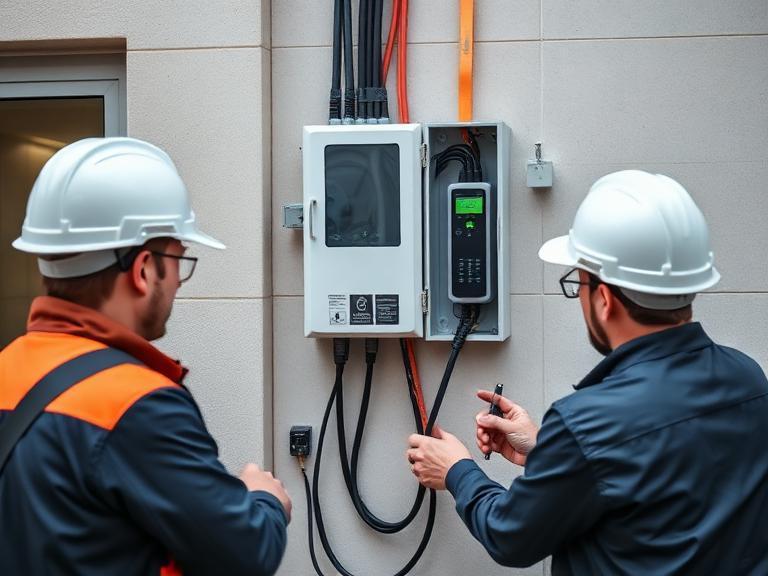
Strategic Value Drivers for Employers
┌─────────────────────────────────────────────────────────────────────────────────────────┐
│                          Core Employer Strategic Drivers                                │
├──────────────────────────────────┬──────────────────────────────────────────────────────┤
│ Driver Category                  │ Operational Impact & Value Creation                  │
├──────────────────────────────────┼──────────────────────────────────────────────────────┤
│ Talent Attraction & Retention    │ • 70%+ of workforce seeking eco-conscious employers. │
│                                  │ • Key differentiator for hybrid return-to-office.   │
├──────────────────────────────────┼──────────────────────────────────────────────────────┤
│ Sustainability & ESG Compliance  │ • Direct reduction in Scope 3 commuting emissions.   │
│                                  │ • Earns credits for LEED, BREEAM, and GRESB.         │
├──────────────────────────────────┼──────────────────────────────────────────────────────┤
│ Corporate Fleet Synergy          │ • Dual-use chargers for company fleet & employees.   │
│                                  │ • Drives down corporate fleet Total Cost of Ownership│
└──────────────────────────────────┴──────────────────────────────────────────────────────┘
1. Talent Acquisition & Employee Retention
Providing charging access serves as a practical employee benefit. For employees living in multi-family housing without dedicated home charging, workplace charging enables EV ownership.
2. Corporate Sustainability & ESG Scope 3 Reporting
Employee commuting accounts for a large portion of corporate Scope 3 greenhouse gas emissions. Installing workplace charging provides verified data for environmental, social, and governance (ESG) reporting, helping earn credits for building sustainability certifications.
3. Property Asset Enhancement
Equipping commercial properties with charging infrastructure increases asset values, protects against tenant attrition, and ensures compliance with updated local building codes.
Technical Hardware & Architecture Specifications
Selecting hardware for workplace EV charging requires matching electrical capacity with typical employee dwell times (typically 6 to 9 hours).
| Engineering Parameter | Commercial Level 2 (Standard) | Commercial Level 2 (High-Power) | DC Fast Charger (DCFC – Mid) |
| Input Voltage | 208V / 240V Single-Phase | 208V / 480V 3-Phase | 480V 3-Phase |
| Power Output Range | 7.2 kW – 11.5 kW | 19.2 kW – 22.0 kW | 50 kW – 180 kW |
| Current Continuous Draw | 30A – 48A Dedicated | 80A Dedicated | 80A – 250A Continuous |
| Miles Range Added / Hour | 25 – 35 Miles | 60 – 80 Miles | 150 – 400 Miles |
| Primary Plug Types | SAE J1772, NACS (J3400) | SAE J1772, NACS (J3400) | CCS Combo 1/2, NACS |
| Target Workplace Use Case | Full-day employee parking | Executive / High-turnover bays | Company fleet & quick top-ups |
| Turnkey Unit Cost Range | $1,500 – $4,500 / port | $3,500 – $6,500 / port | $28,000 – $65,000 / unit |
Step-by-Step Implementation Framework
Executing a workplace EV charging deployment involves a structured process to ensure safety, local permit approval, and power allocation.
1.1. Employee Demand Survey & Electrical Audit:Weeks 1 – 3.
Survey employees to project EV adoption over 1-, 3-, and 5-year horizons. Have a certified electrical engineer evaluate main panel capacity, transformer headroom, and available spare breaker slots.
2.2. Hardware Selection & Software CPMS Architecture:Weeks 3 – 5.
Choose UL-certified hardware that supports OCPP 1.6-J or OCPP 2.0.1. Select a Cloud Charge Point Management System (CPMS) featuring dynamic load management, automated billing, and Single Sign-On (SSO) integration.
3.3. Engineering Designs, Permitting & Incentive Filing:Weeks 5 – 9.
Draft stamped single-line electrical diagrams (SLDs) and civil parking site plans. Submit permit applications to local building departments and apply for utility make-ready rebates and tax credits.
4.4. Civil Construction, Trenching & Electrical Wiring:Weeks 9 – 13.
Saw-cut asphalt, excavate trenches, and pour concrete equipment pads. Run heavy-duty copper conductors in rigid metal conduits (RMC), install protective bollards, mount pedestals, and establish cellular network connections.
5.5. System Commissioning, Access Policy & Launch:Weeks 13 – 15.
Perform GFCI safety testing and commission chargers via the back-end CPMS software. Integrate corporate single sign-on (SSO) for employees, set pricing tiers, establish idle fees, and publish usage rules.
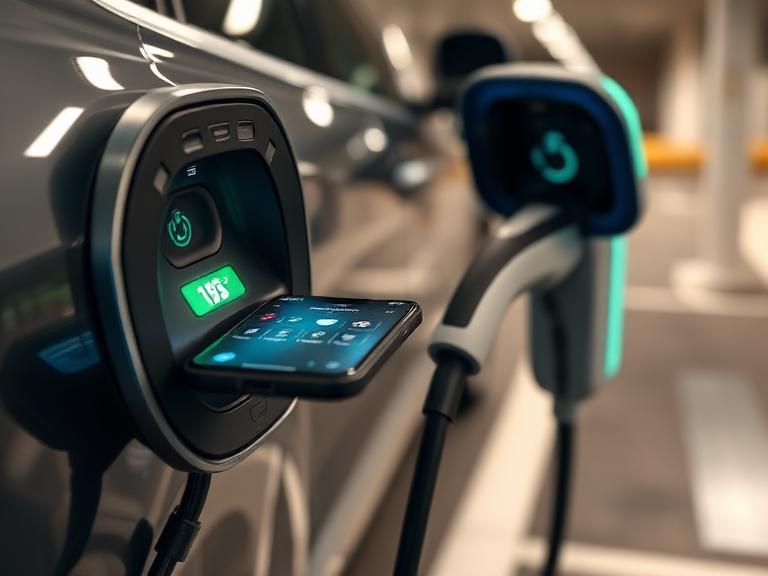
Access Control, Monetization & Pricing Models
Workplace charging networks require defined pricing strategies to balance operating costs with employee satisfaction.
                 ┌─────────────────────────────────────────────────────────┐
                 │       Workplace Charging Access & Billing Engine        │
                 └────────────────────────────┬────────────────────────────┘
                                              │
         ┌─────────────────────────┬──────────┴──────────┬─────────────────────────┐
         │                         │                     │                         │
┌────────▼────────┐       ┌────────▼────────┐   ┌────────▼────────┐       ┌────────▼────────┐
│ 1. Employer-    │       │ 2. Cost-Recovery│   │ 3. Market-Rate  │       │ 4. Tiered Hybrid│
│    Subsidized   │       │    Billing      │   │    Monetization │       │    Access       │
├─────────────────┤       ├─────────────────┤   ├─────────────────┤       ├─────────────────┤
│ • 100% Free for │       │ • Billed at cost│   │ • Billed above  │       │ • Free for 2 hrs│
│   Employees     │       │   per kWh used  │   │   cost per kWh  │       │   then per-hour │
│ • High Employee │       │ • Offsets energy│   │ • Generates     │       │ • Prevents bay  │
│   Satisfaction  │       │   overhead      │   │   facility NOI  │       │   hogging       │
└─────────────────┘       └─────────────────┘   └─────────────────┘       └─────────────────┘
Common Operating Models
- Fully Subsidized (Free Employee Charging):The company covers electricity costs. This maximizes employee satisfaction but requires idle fees to prevent vehicles from occupying bays all day.
- At-Cost Energy Recovery:Employees pay the exact cost per kWh that the business pays to the utility. This eliminates operating expense burdens for the employer while providing employees with cheaper charging than public stations.
- Tiered Hybrid Access (Time-Delimited):Charging is free for the first 2–3 hours, after which an hourly fee or idle penalty ($5–$10/hour) applies. This encourages drivers to move their vehicles, freeing up bays for coworkers.
- Public Monetization After-Hours:Chargers are reserved for employees during business hours, then opened to the public in the evening at market rates, generating secondary facility revenue.
Power Control Systems (PCS) & Dynamic Load Management
Installing multiple EV chargers can risk exceeding facility electrical capacities or triggering steep utility demand charges. Dynamic Load Management (DLM) resolves this without requiring expensive utility service upgrades.
Without Dynamic Load Management (Static Allocation):
Total Available Circuit Capacity: 100 Amps
[Charger 1: 32A] + [Charger 2: 32A] + [Charger 3: 32A] = 96 Amps Used
*Cannot add Charger 4 without a panel upgrade*

With Dynamic Load Management (Smart Active Sharing):
Total Available Circuit Capacity: 100 Amps
[6 Chargers Connected] ──► CPMS automatically distributes ~16 Amps per port
*When one vehicle completes its charge, full power dynamically redirects to active ports*
By leveraging NEC Section 625.42 (Power Control Systems), software monitors building load in real time and throttles charger outputs when facility power demands peak, avoiding high demand charges.
Financial Analysis: CapEx, OpEx, and ROI Model
Capital Expenditure (CapEx) Breakdown (12-Port Workplace Installation)
| Expense Category | Estimated Cost | Notes / Scope |
| Level 2 Hardware (6 Dual-Port Units) | $21,000 | Commercial-grade dual pedestals with retractor cables |
| Electrical Panel & Sub-panel Upgrades | $8,500 | Dedicated breaker panel and metering setup |
| Civil Works, Trenching & Concrete Pads | $11,000 | Saw-cutting asphalt, conduit burial, and repaving |
| Permits, Engineering & Utility Fees | $4,500 | Stamped single-line drawings and city inspections |
| Gross Project CapEx | $45,000 | Total upfront cost prior to incentives |
| Utility Rebates & Federal Tax Credits | -$18,000 | Assumes 40% combined incentive coverage |
| Net CapEx Outlay | $27,000 | Final net expense |
Annual Operating Financial Projection
Assumptions:
• 12 Charging Ports @ 4.5 Hours Average Daily Use per Port
• Total Energy Delivered: ~35,500 kWh / Year
• Commercial Power Cost: $0.13 / kWh
• Employee Billed Rate: $0.25 / kWh (At-Cost + Maintenance Margin)

Financial Summary:
Gross Annual Revenue Billed to Drivers:        $8,875
Annual Electricity Supply Expenses:            -$4,615
Annual CPMS Software & Network Operating Fees:  -$1,440
Annual Maintenance & Inspections:              -$800
-------------------------------------------------------
Net Annual Cash Flow:                           $2,020

Intangible Benefits & Value Offsets:
• Scope 3 Carbon Offsets: ~15 Metric Tons CO2 Equivalent / Year
• Commercial Property Asset Value Enhancement
• Increased Employee Retention & Reduced Turnover Costs
Q1: Why should our company invest in workplace EV charging?
Answer: Workplace EV charging attracts and retains eco-conscious talent, supports hybrid return-to-office incentives, directly reduces corporate Scope 3 carbon emissions, and increases commercial property values. It also provides a essential service for employees who lack home charging options.
Q2: Is electricity provided for workplace EV charging considered a taxable benefit for employees?
Answer: In many regions (including IRS guidelines in the US and specific tax exemptions in the EU/UK), employer-provided EV charging for commuting is exempt from fringe benefit tax rules, though specific limits apply. Consulting with corporate tax advisors is recommended to ensure compliance.
Q3: How much does it cost to install workplace EV chargers?
Answer: Turnkey Level 2 commercial installations range from $3,000 to $7,500 per port, including hardware, permits, trenching, and panel work. Utility rebates, municipal grants, and federal tax credits can offset 30% to 80% of these upfront costs.
Q4: Should workplaces install Level 2 chargers or DC Fast Chargers?
Answer: Commercial Level 2 chargers (7.4 kW – 19.2 kW) are ideal for workplaces because employee vehicles remain parked for 6 to 9 hours. DC Fast Chargers are generally unnecessary for standard employee parking and add significantly higher hardware, installation, and utility demand charge costs.
Q5: How do we prevent employees from leaving cars plugged in all day?
Answer: Cloud management software allows you to enforce idle fees. For example, after a 30-minute grace period following charge completion, the system applies an hourly fee ($5–$10/hour), encouraging employees to move their cars to standard spaces.
Q6: Can we restrict charging station access to employees only?
Answer: Yes. Access can be managed using RFID keycards, company single sign-on (SSO) app integration, or authorized driver email lists. Systems can also open chargers to the public during non-business hours for secondary monetization.
Q7: How does Dynamic Load Management (DLM) protect our electrical system?
Answer: DLM software tracks building power consumption in real time. When facility energy draw approaches panel limits, DLM throttles charger output across connected ports, allowing companies to install more ports without paying for expensive utility transformer upgrades.
Q8: What pricing model should our workplace implement?
Answer: Common models include:
- Fully Subsidized: Free charging as an employee benefit.
- At-Cost Energy Recovery: Billed per kWh to match company utility rates.
- Time-Delimited Hybrid: Free for the first 2 hours, followed by an hourly fee to ensure turnover.
Q9: How many EV chargers should our company install initially?
Answer: A solid rule of thumb is electrifying 5% to 10% of total parking spaces based on initial employee surveys. Pre-installing underground conduit during civil works allows you to expand capacity to 20%+ in the future at minimal additional cost.
Q10: What certification should our installation contractors hold?
Answer: Workplaces should hire licensed electrical contractors certified by the Electric Vehicle Infrastructure Training Program (EVITP). EVITP certification ensures compliance with National Electrical Code (NEC) standards, continuous load safety, and local utility regulations.
Q11: Can workplace chargers be shared with company fleet vehicles?
Answer: Yes. Dual-use setups reserve chargers for employee vehicles during daytime office hours and redirect power to corporate fleet vehicles overnight.
Q12: How do workplace chargers connect to corporate IT systems?
Answer: Commercial stations connect via built-in 4G/5G cellular modems or hardwired Ethernet, isolating charging traffic from corporate IT networks to maintain cybersecurity.
Q13: What ongoing maintenance is required for workplace charging stations?
Answer: Routine maintenance involves inspecting cables and connectors, testing GFCI ground-fault components, keeping air vents clear, and deploying over-the-air (OTA) firmware updates. Partnering with a management provider helps maintain high uptime SLAs.
Q14: How does workplace EV charging contribute to LEED certification?
Answer: Installing Level 2 EV charging stations for at least 5% of parking spaces earns credit points under LEED v4/v4.1 Building Operations and Maintenance (O+M) and Location and Transportation (LT) categories.
Q15: How long does a workplace EV charging installation project take?
Answer: A typical Level 2 deployment takes 8 to 12 weeks from site assessment and employee surveys to software configuration and commissioning.
Strategic Conclusion
Workplace EV charging bridges corporate sustainability commitments with practical employee amenities. By selecting open-protocol (OCPP) hardware, deploying dynamic load management software, and leveraging local rebate programs, businesses can build scalable charging networks that enhance commercial property value, lower corporate carbon footprints, and support the future of workplace mobility.



Leave a Comment